The Morning That Looked Ordinary
She thought it was just another school day.
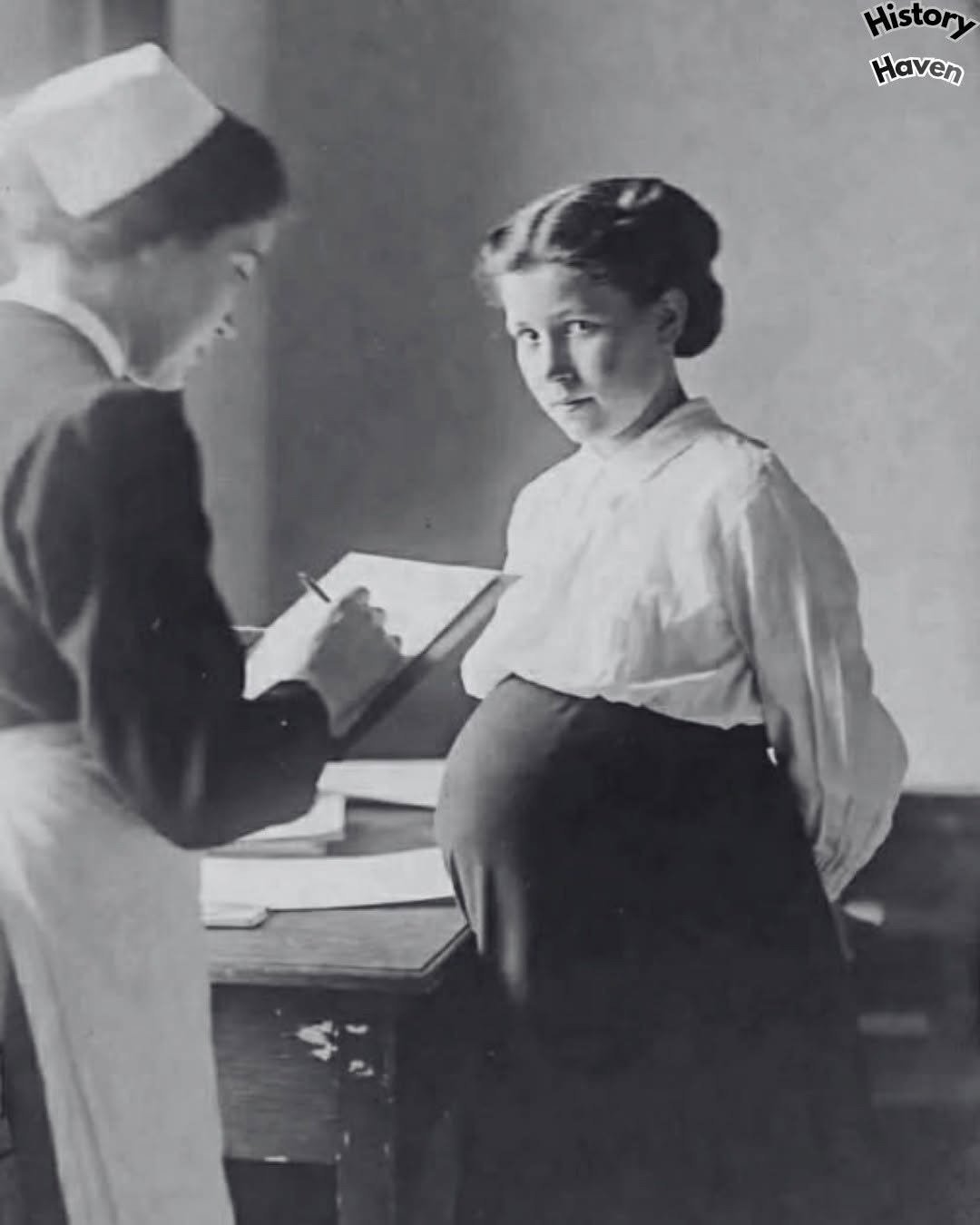
On April 15, 1914, thirteen-year-old Emma Johnson walked into Boston Public School No. 12 expecting nothing more than the ordinary routine that thousands of children experienced every year.
The classroom was familiar.
The hallways were familiar.
The health examination was familiar.
Like many urban schools during the early twentieth century, Boston public schools had regular medical inspections designed to protect children from illness. Crowded classrooms and growing city populations meant health officials were constantly searching for signs of disease, malnutrition, and other problems that could affect students.
For most children, these examinations were brief moments of inconvenience.
A nurse checked their height.
Listened to their breathing.
Looked for signs of illness.
Then they returned to class.
But for Emma Johnson, that ordinary examination became the moment that changed the direction of her entire life.
Because standing across from her that morning was a nurse who noticed something others had failed to see.
Her name was Helen Morrison.
And she understood that sometimes protecting a child requires more than checking a chart.
Sometimes it requires asking one more question.
The Role of School Nurses in Early 20th-Century America
In 1914, school nurses were becoming increasingly important in American cities.
Public health systems were still developing, and many families had limited access to doctors.
Schools became one of the few places where children could receive regular health attention.
Nurses were responsible for identifying conditions that might otherwise remain hidden.
They checked for infectious diseases.
They monitored physical development.
They helped children who were undernourished.
They educated families about hygiene and prevention.
Their work often extended far beyond medicine.
A school nurse was sometimes the first adult outside a child’s family who noticed something was wrong.
In many cases, a nurse’s observation could mean the difference between receiving help and continuing to suffer silently.
That responsibility required more than medical knowledge.
It required compassion.
The Examination That Revealed the Truth
When Emma stepped forward for her examination, nothing initially suggested that the morning would become extraordinary.
But Helen Morrison noticed details that others might have overlooked.
The nurse saw a child who appeared unusually tired.
She noticed Emma’s fragile appearance.
She recognized that something about the girl’s condition did not match her age.
A thirteen-year-old child should have been experiencing childhood.
Instead, the nurse recognized signs that suggested a much more serious situation.
Rather than confronting Emma publicly, Morrison approached carefully.
She asked gentle questions.
She created a space where the young girl could answer honestly.
That quiet approach mattered.
Children often remain silent when they are frightened.
They may not understand what is happening to them.
They may believe certain situations are normal because they have never known anything different.
But a compassionate adult can sometimes create the first opening for the truth to emerge.
A Child Carrying an Adult Burden
During the conversation, Emma revealed information that transformed the examination immediately.
She said she had married months earlier.
She said she felt fine.
But beneath those simple words was a reality far beyond what any child should have faced.
Emma was thirteen years old.
She was pregnant.
And according to the account, she had been married at only twelve years old to a man significantly older than herself.
The revelation turned a routine school health check into a child protection emergency.
For Emma, the situation may not have felt unusual.
She had been living within it.
But for Nurse Morrison, the truth was clear.
A child was in danger.
And someone needed to act.
The Decision to Speak When Silence Was Easier
The easiest thing would have been to complete the examination and move on.
Many troubling situations throughout history remained hidden because adults chose not to interfere.
Sometimes people avoided asking difficult questions.
Sometimes they accepted harmful circumstances because they believed nothing could be changed.
But Helen Morrison did not look away.
She documented what she found.
She reported the situation to the school administration.
She insisted that action was necessary.
Her decision reflected one of the most important responsibilities of any professional working with children:
The courage to speak when a child cannot fully speak for themselves.
The examination was no longer just about health.
It became about protection.
A School Record That Became a Lifeline
The documentation created during that examination became more than a medical record.
It became evidence that someone had recognized Emma’s situation.
It created a record at a time when silence could have allowed the situation to continue.
School health records were often designed to track physical conditions.
But in Emma’s case, the record represented something much more important.
It showed that an adult had paid attention.
It showed that someone believed her circumstances mattered.
It showed that her life could still take a different direction.
A single written observation changed what happened next.
The Intervention That Followed
After Nurse Morrison contacted school officials, authorities and child welfare representatives became involved.
Emma was removed from the situation and placed somewhere safer.
The intervention did not erase what had already happened.
It could not give her back the childhood she had lost.
But it changed the future that remained.
For many children facing difficult circumstances, early intervention is the difference between continuing harm and finding a path toward recovery.
Emma’s case demonstrated the importance of adults recognizing warning signs and taking responsibility.
A school nurse’s job was not only to identify illness.
Sometimes it was to recognize suffering.
A Future That Was Almost Lost
Emma eventually gave birth.
Her child was adopted.
Afterward, she returned to school and continued building a life beyond the circumstances that had surrounded her childhood.
The details of her later years reveal something important.
She was not defined only by what happened to her.
She became a person with her own future.
She eventually married again.
She raised children.
She lived into old age.
Her life continued beyond the moment when others might have defined her only by tragedy.
That continuation was possible because someone intervened when she needed help most.
The Quiet Heroism of Nurse Helen Morrison
History often remembers dramatic acts of courage.
Rescues.
Discoveries.
Battles.
Public achievements.
But some of the most meaningful moments happen quietly.
A nurse asking a careful question.
A teacher noticing a change in a student.
A doctor listening when someone is afraid to speak.
Helen Morrison did not perform a famous public act.
She did not become a nationally recognized figure.
She simply paid attention.
But that attention changed a child’s life.
Why Small Moments Can Change History
The story of Emma Johnson reminds us that history is not only shaped by major events.
It is also shaped by individual decisions.
A person chooses whether to ignore something.
A person chooses whether to ask.
A person chooses whether to help.
Those decisions can have consequences that last decades.
For Emma, the turning point was not a famous speech or a major historical event.
It was a health examination.
A few questions.
A nurse who cared enough to listen.
The Importance of Seeing the Person Behind the Record
Medical and school records often reduce people to facts.
Names.
Numbers.
Measurements.
Dates.
But behind every record is a human story.
Emma’s examination could have been nothing more than another entry in a school file.
Instead, it became the beginning of a rescue.
The nurse did not see only a physical condition.
She saw a child.
That difference mattered.
A Reminder From More Than a Century Ago
More than one hundred years later, the story still carries a powerful message.
Children often depend on adults to notice what they cannot explain.
They may not know how to ask for help.
They may not realize that something is wrong.
They may fear the consequences of speaking.
That is why awareness and compassion matter.
One caring person can become the reason someone escapes a situation they never should have faced.
The Moment One Person Refused to Look Away
Emma Johnson entered Boston Public School No. 12 expecting an ordinary day.
She expected a routine examination.
She expected to return to class.
Instead, she met someone who recognized that her situation required attention.
Nurse Helen Morrison looked closer.
She asked questions.
She acted.
And because she did, a child’s future changed.
The story leaves behind a lesson that remains relevant today:
Sometimes the people who change lives are not the ones standing on stages or appearing in history books.
Sometimes they are the ones quietly doing their work, noticing what others miss, and choosing to care.
Because sometimes history does not turn on a great battle or a famous decision.
Sometimes it turns on one person looking at another human being and saying:
I see you. And I will not walk away.