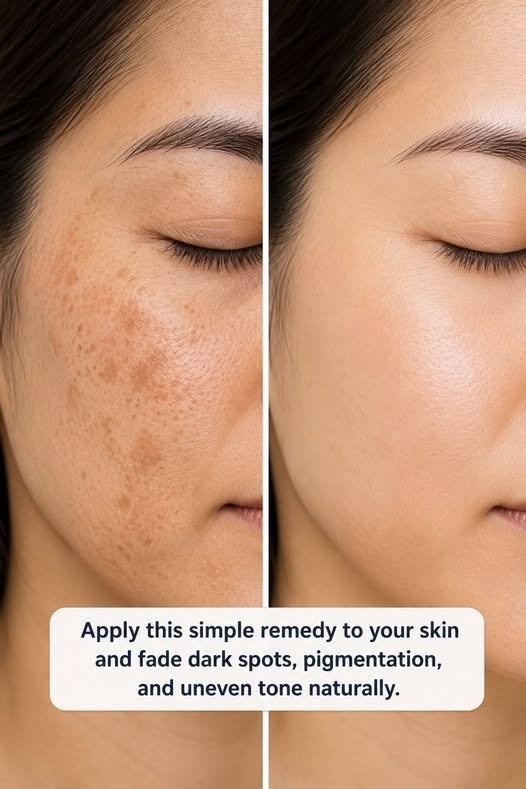
Dark patches on the cheeks can be frustrating, especially when they seem to become more noticeable after spending time in the sun.
Uneven skin tone can develop for many reasons, including sun exposure, inflammation, hormonal changes, acne, and natural changes in the skin. Melasma, in particular, can be stubborn and may require consistent care for months.
That’s why simple homemade skincare remedies continue to attract so much attention.
One of the most widely shared combinations is a mixture of turmeric, honey, and plain yogurt.
The three ingredients are often used together because turmeric is associated with soothing and antioxidant properties, honey helps moisturize the skin, and yogurt contains lactic acid, which can provide gentle exfoliation.
But there’s an important distinction between a popular home remedy and a proven medical treatment.
This mixture may support healthier-looking skin and provide mild brightening effects, but it shouldn’t be presented as a guaranteed cure for melasma or deep pigmentation.
Discover more
retail outlet
retails
Dictionaries & Encyclopedias
Why Turmeric Is Used for Dark Spots
Turmeric contains curcumin, a naturally occurring compound that has been studied for its antioxidant and anti-inflammatory properties.
Laboratory research has also explored curcumin’s potential influence on pathways involved in pigmentation.
This is one reason turmeric has become popular in traditional skincare.
However, applying turmeric powder from the kitchen to the skin is not the same as using a standardized dermatological product containing a known concentration of curcumin.
So while turmeric may have potential benefits, the results of a homemade mask can vary considerably from person to person.
What Honey Can Do for the Skin
Honey is another ingredient commonly found in homemade face masks.
It acts as a humectant, meaning it can help attract and retain moisture.
Well-formulated honey-based skincare products may also provide soothing and antimicrobial properties.
For someone dealing with dry or rough skin, adding a small amount of honey to a face mask can make the mixture feel more moisturizing.
However, honey isn’t a proven treatment for melasma itself.
Its main potential benefit in this type of mask is supporting skin hydration and comfort.
Why Yogurt Is Included
Plain yogurt contains lactic acid, an alpha hydroxy acid (AHA).
Lactic acid can help loosen and remove dead skin cells from the surface of the skin, which can make skin feel smoother and appear more radiant.
This is also why AHAs are commonly used in professionally formulated skincare products.
The concentration of lactic acid in ordinary yogurt is much lower and less predictable than in a formulated exfoliating product, so the effect of a yogurt mask is likely to be relatively mild.
How to Make the Mask
If you want to try this traditional-style mixture, keep the preparation simple.
Ingredients
1 teaspoon plain, unsweetened yogurt
½ teaspoon honey
A small pinch of turmeric powder
Mix the ingredients until they form a smooth paste.
Discover more
Email
Computer Security
History
Before putting the mixture on your entire face, test a small amount on an inconspicuous area of skin.
If there is significant burning, itching, swelling, or redness, wash it off and don’t use it again.
How to Apply It
Start with clean, dry skin.
Apply a thin layer to the cheeks or other areas where you want to try it.
Avoid the eyelids, lips, broken skin, and areas that are already irritated.
Leave it on for approximately 10 minutes the first time.
Then rinse gently with lukewarm water.
Don’t scrub aggressively to remove the turmeric.
Discover more
Alcoholic Beverages
email
Pork
Pat your skin dry and follow with a gentle moisturizer.
Because turmeric can temporarily stain skin or clothing, it’s best to use only a small amount.
How Often Should You Use It?
More isn’t necessarily better.
Using a homemade mask every day could irritate the skin, particularly if you have sensitive skin.
A cautious approach is to use it once or twice a week initially and see how your skin responds.
If your skin becomes dry, itchy, irritated, or unusually red, stop using it.
Skin irritation can actually make pigmentation more noticeable in some people, so trying to brighten the skin too aggressively can backfire.
Discover more
Retail Store
Geographic Reference
Email & Messaging
Don’t Expect Overnight Results
One of the biggest misconceptions surrounding natural skincare remedies is that pigmentation can disappear after one application.
That’s rarely realistic.
You may notice that your skin feels softer or looks temporarily brighter after using a moisturizing or exfoliating mask.
That doesn’t necessarily mean the underlying pigmentation has been removed.
Melasma and other forms of hyperpigmentation develop deeper processes within the skin and often require much more consistent treatment.
If a home remedy produces any visible improvement, it is likely to be gradual and relatively subtle.
Sunscreen Is More Important Than the Mask
If you’re trying to improve dark patches, there’s one step that shouldn’t be skipped.
Sun protection.
Ultraviolet exposure can worsen pigmentation and make it harder for dark spots to fade.
Use a broad-spectrum sunscreen with an appropriate SPF every day, particularly when you’ll be outdoors.
Reapply as directed, especially after sweating or swimming.
Wearing a hat, seeking shade, and limiting prolonged direct sun exposure can provide additional protection.
A complicated skincare routine won’t accomplish much if your skin is repeatedly exposed to intense sunlight without protection.
Be Careful If You Have Sensitive Skin
Natural doesn’t automatically mean risk-free.
Turmeric can stain the skin temporarily, and some people may develop irritation or an allergic reaction.
Honey can also cause reactions in people with certain allergies.
Lactic acid, even in mild forms, can irritate already sensitive or damaged skin.
That’s why a patch test is a sensible precaution.
Don’t apply the mixture immediately after shaving, exfoliating, using strong acids, or applying other potentially irritating products.
What About Melasma?
Melasma is different from an ordinary dark spot.
It often appears as larger, symmetrical areas of brown or gray-brown pigmentation, particularly on the cheeks, forehead, nose, or upper lip.
Hormonal factors and ultraviolet or visible light exposure can contribute to it.
Because melasma can be persistent and frequently returns, treating it may require a long-term strategy.
A homemade turmeric, honey, and yogurt mask may be used as an optional skincare treatment, but it shouldn’t replace professional treatment when melasma is significant or persistent.
A dermatologist may recommend treatments specifically designed for pigmentation, depending on the individual’s skin type and medical history.
When You Should See a Dermatologist
Consider getting professional advice if:
Dark patches continue getting worse.
Pigmentation suddenly appears without an obvious reason.
Home skincare products cause persistent irritation.
The patches don’t improve after consistent basic skincare.
You aren’t sure whether the discoloration is melasma or another skin condition.
The pigmentation is significantly affecting your confidence or quality of life.
A dermatologist can determine what is causing the pigmentation and recommend an appropriate treatment.
The Bottom Line
The turmeric, honey, and yogurt mixture is popular for a reason: the ingredients are inexpensive, accessible, and each has properties that may support the appearance and feel of the skin.
Turmeric provides compounds with antioxidant and anti-inflammatory potential.
Honey can help moisturize the skin.
Yogurt contains lactic acid, which provides mild exfoliation.
Together, they may leave the skin feeling smoother and looking temporarily brighter.
But there’s a big difference between supporting the appearance of your skin and removing melasma.
Don’t expect a homemade mask to erase stubborn pigmentation overnight.
If you decide to try it, use a small amount, patch-test first, avoid aggressive rubbing, and stop if your skin becomes irritated.
Most importantly, make sun protection part of your daily routine.
Because when it comes to dark patches and melasma, protecting your skin from further pigmentation can be just as important as treating the pigmentation that’s already there.
Natural skincare can be a gentle addition to your routine—but persistent melasma deserves realistic expectations and, when necessary, professional care.